TV and the Entertainment PC
 TV Goes Digital TV Goes Digital |
CyberLink and Today's TV |
The TV is at the center of living rooms everywhere, and has been at the center of our lives for a little over six decades. From the very first television transmissions of 30 lines per second in black & white back in the roaring '20s, to the current 525/625 lines in color (NTSC/PAL formats respectively), the television set has undergone never ending metamorphoses. The process has been an intermittent one, progressing through stages and sub-stages roughly every decade. This year promises to be the most significant transformation in the TV's life cycle, transpiring right before our own eyes—the shift from analog signals to digital.
TV Goes Digital
To be unaffected by the prospects of analog TV signals going digital is impossible. Besting analog TV in terms of image resolution, sound quality, dual-communication capacity, and freeing up bandwidth for TV broadcasters, DTV (digital TV) broadcasting is currently being implemented worldwide. While DTV began in the late 90's, the broadcasting of analog signals will come to a halt in the next couple of years starting in Canada, U.S. and Taiwan, with the latest phase out in 2015.
DVI/HDMI is the Future
In order to understand the Digital Video Interface (DVI), one must first have a working knowledge of what a digital TV (DTV), a broad term at best, implies.
What is a Digital TV?
To be classified as a DTV or HDTV (High Definition Television), video definition must be higher than current analog conventions, such as TVs that have built-in digital TV receivers based on plasma, DLP, LCD, or any other digital technology (i.e. conventional plasma or LCD TVs) or a TV connected to an external digital set-top box (STB) receiver.
| The next question is: if you are one of the estimated 50 million worldwide who own a DTV and a DVD player, what kind of connection transfers the digital video quality of your DVD to your digital TV? Would this video cable happen to be red and yellow in color? Or maybe a cable with three different colored component connectors? Or might they be 4-pinned connectors called S-Video cables? Well, the good news is that you are not alone if you answered yes to the above. The bad news is, these cables are 100% analog, and not even remotely close to digital in terms of video quality. | 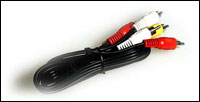 |
Digital Video Interface (DVI) Technology Has Arrived
This is where DVI/HDMI comes in. The DVI (Digital Video Interface), currently being adopted by major HDTV and DVD manufacturers, transmits and receives digital video signals ranging from SD (Standard Definition) programs, HD (High Definition) programs, DVD, or PC input. High Definition Multimedia Interface (HDMI), backward compatible to DVI, includes the audio signals along with the video. Currently, DVI's adoption rate is slower, for some manufacturers have entirely bypassed this evolution and is directly adopting HDMI.
DVI/HDMI and High-bandwidth Digital Content Protection (HDCP)
A specification originally developed by Intel Corporation to protect digital entertainment content across the DVI/HDMI interface, High-bandwidth Digital Content Protection (HDCP) encrypts transmission of digital content between the video source, such as a computer or DVD player (i.e. transmitter), and the digital display device (e.g. monitor, television or projector). HDCP is not designed to prevent copying or recording of digital content, but protects the integrity of content as it is being transmitted.
HDCP was created with content providers in mind, forcing device manufacturers to follow suit. Device manufacturers must obtain licenses to enable their devices to receive and display encrypted content. By doing so, they agree to honor flags in the content that will limit the storage and re-transmission of content.
What is the Broadcast Flag?
| The controversial broadcast flag technology, created by the Motion Picture Association of America (MPAA) for the sole purposes of preventing unauthorized mass distribution, will be implemented on July 1, 2005 by the Federal Communications Commission (U.S.). The broadcast flag is a digital code embedded into a digital broadcasting stream that serves to signal the protection level of the program to the receiver (e.g. HDTV, recorder, any digital device). |  |
However, the point of contention lies not in the embedding of the code, but in the requirement that all receivers (e.g. monitors, HDTVs, video recorders) must have the capability to decrypt and protect flagged content. Thus, this limits how and when users may play, record or distribute this content.
CyberLink and Today's TV
TV already occupies an important place in today's living rooms. As entertainment quickly shifts from analog programming to digital programming and services, the capability to provide users an enjoyable digital TV experience is pivotal.
CyberLink, a leader in digital audio/video technology, has been developing its TV recording and playback technology ever since the inception of digital TV. It began with CyberLink PowerVCR, the Personal Video Recorder (PVR) software that pioneered today's PVR recorders' must-have features, including: instant TV replay, scheduled recording, and always time-shift recording. Today, PVR technology has been significantly upgraded and advanced in the form of the world's leading digital home software, CyberLink PowerCinema. CyberLink's Role in DRMMedia companies' fear of piracy has driven the development of content protection standards at an accelerated pace. CyberLink currently supports the leading standards in digital content protection—from transmission across wired and wireless networks, to copy-once disc burning and playback. |
 |
CyberLink has also been deeply involved with both the transmission and playback aspects of the digital home entertainment experience, with PowerCinema receiving certification both as a media server (transmission device) and client (receiver) from the UPnP® Implementers Corporation (UIC). Support for key industry bodies and involvement in the development of new standards also positions CyberLink at the leading edge of new PC and electronics specifications.
DVB-S, DVB-T and DVB-SI and CyberLink
Digital Video Broadcasting (DVB), divided into Satellite and Terrestrial (i.e. transmitted through air) transmissions, can carry Service Information in addition to the video and audio signals. A broad range of hardware providers has already implemented support for digital TV signals, while TV broadcasters are introducing digital content at an accelerated pace. CyberLink PowerCinema already supports DVB-S and DVB-T hardware and leverages DVB-SI to generate scheduling information via an integrated Electronic Program Guide (EPG).
The availability of digital TV content is not universal and consistent—companies like CyberLink are required to cope with various levels of station programming and national reach in addition to regulatory standards and technical specifications as they apply within each region. A major area of complexity is integrated EPG technology.
Electronic Program Guide (EPG) Technology and CyberLink
The shift to digital TV will see the desire for even more integrated and convenient features, such as the ability to schedule recording via an Electronic Program Guide (EPG)—Internet, digital TV, or Teletext-based—and the remote navigation of features like station previewing. TV-like interaction with the digital hub will dramatically increase the popularity of surfing of photo albums and music libraries, and drive integration of digital features such as radio, games and the Web. CyberLink has all areas covered, including Teletext and Internet-based Electronic Program Guides (EPGs) support in Europe and DVD burning via remote control with CyberLink MakeDVD.
