


Face Recognition
1:1 verification and 1:N search, with NIST top-ranked accuracy and fast performance across databases containing tens of millions of faces.


Build and scale enterprise face recognition and identity verification applications with NIST-evaluated accuracy, integrated liveness detection, and centralized management, all deployed within your infrastructure.
NIST FRTE 1:1
99.83%
TAR @ 1E-6 FMR
Visa Category|Mar. 2023
NIST FRTE 1:N
99.61%
Identification Accuracy in a 12M Face Database Search
Mugshot Category|Jul. 2024
NIST FATE PAD
100%
TRR, No. 1 Among 82 Vendors
Passive 2D PAD|Sep. 2023
iBeta PAD
100%
TRR, Fully On-Device
Level 2|Mar. 2022
ISO Certifications
ISO 27001 & 27701
Information Security & Privacy Management
FaceMe® Platform gives organizations a centralized, scalable way to deploy and manage face recognition across enterprise applications. Run it on your own servers or in a private cloud, with the flexibility to scale resources as needed while maintaining full control over biometric data.
ENTERPRISE-READY FROM DAY ONE
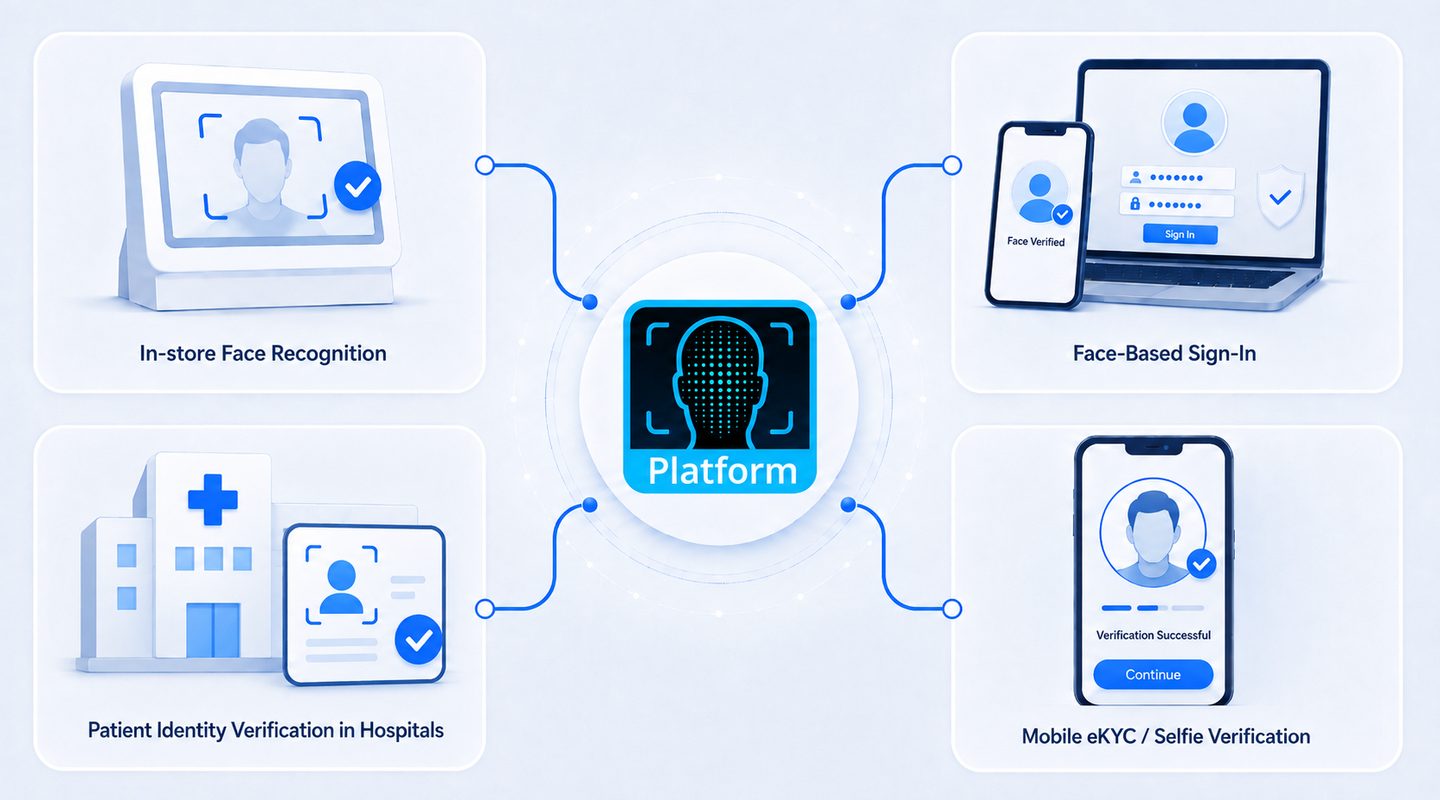
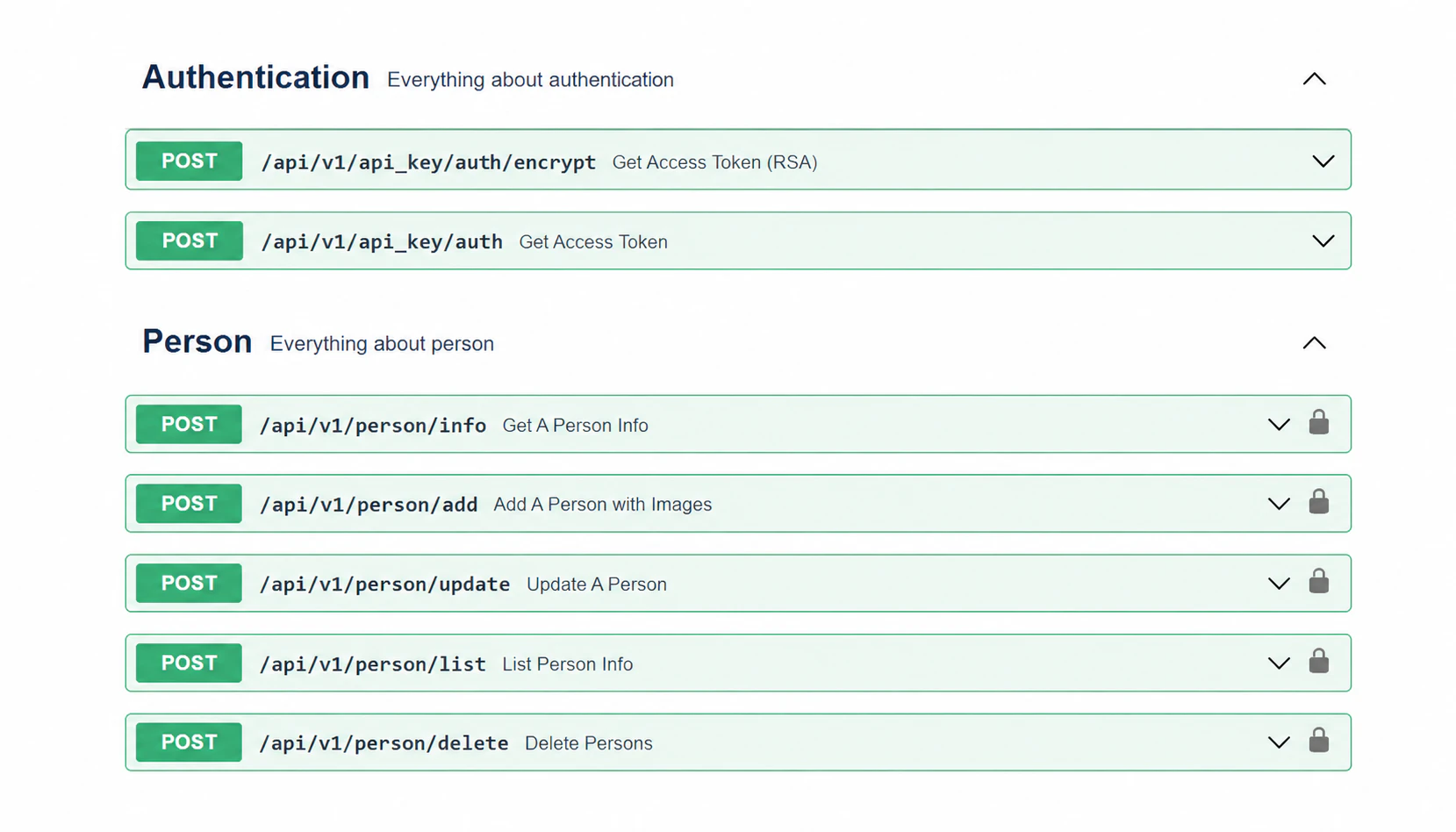
FaceMe® Platform brings a broad range of biometric and facial analysis capabilities together through a single REST API. Integrate face recognition, liveness detection, person attribute analysis, image quality assessment, and more into web, mobile, and large-scale business applications.
1:1 verification and 1:N search, with NIST top-ranked accuracy and fast performance across databases containing tens of millions of faces.

Protect against presentation attacks with passive 2D liveness detection and anti-spoofing that helps detect printed photos, screen replays, and other presentation attacks. Ranked #1 by NIST FATE PAD.

Detect AI-generated synthetic faces presented on screen, with a 95.5% true rejection rate.

Analyzes age, gender, and emotion from facial images for age gating, analytics, and smart signage.
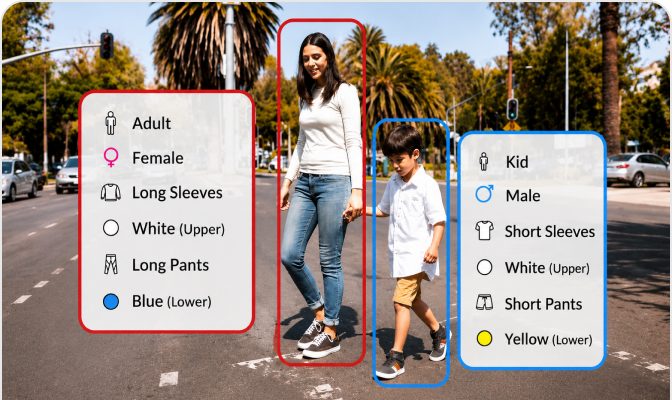
Find people based on clothing type, color, and accessories, and re-identify them across cameras without relying on facial recognition.
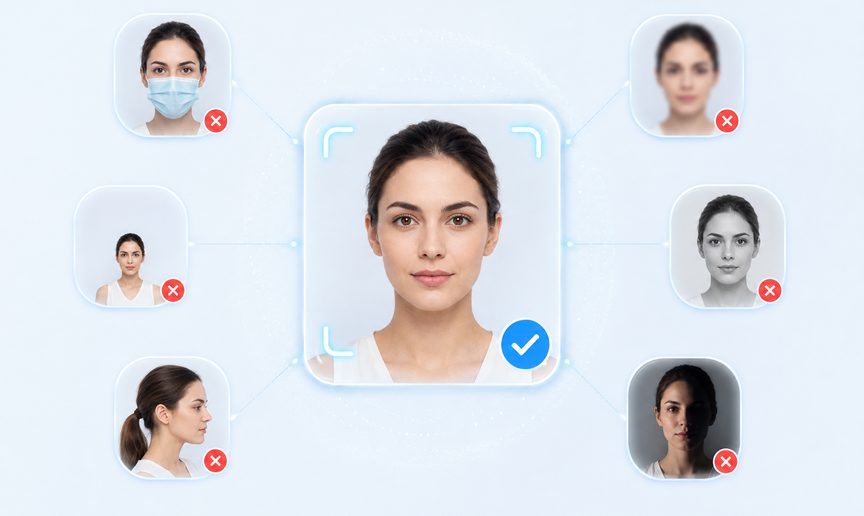
Detect occlusion, blur, poor lighting, unsuitable angles, insufficient image size, and grayscale images before adding a face to the database.

Ready-to-use APIs and client libraries simplify face recognition integration for browser-based services and client applications.

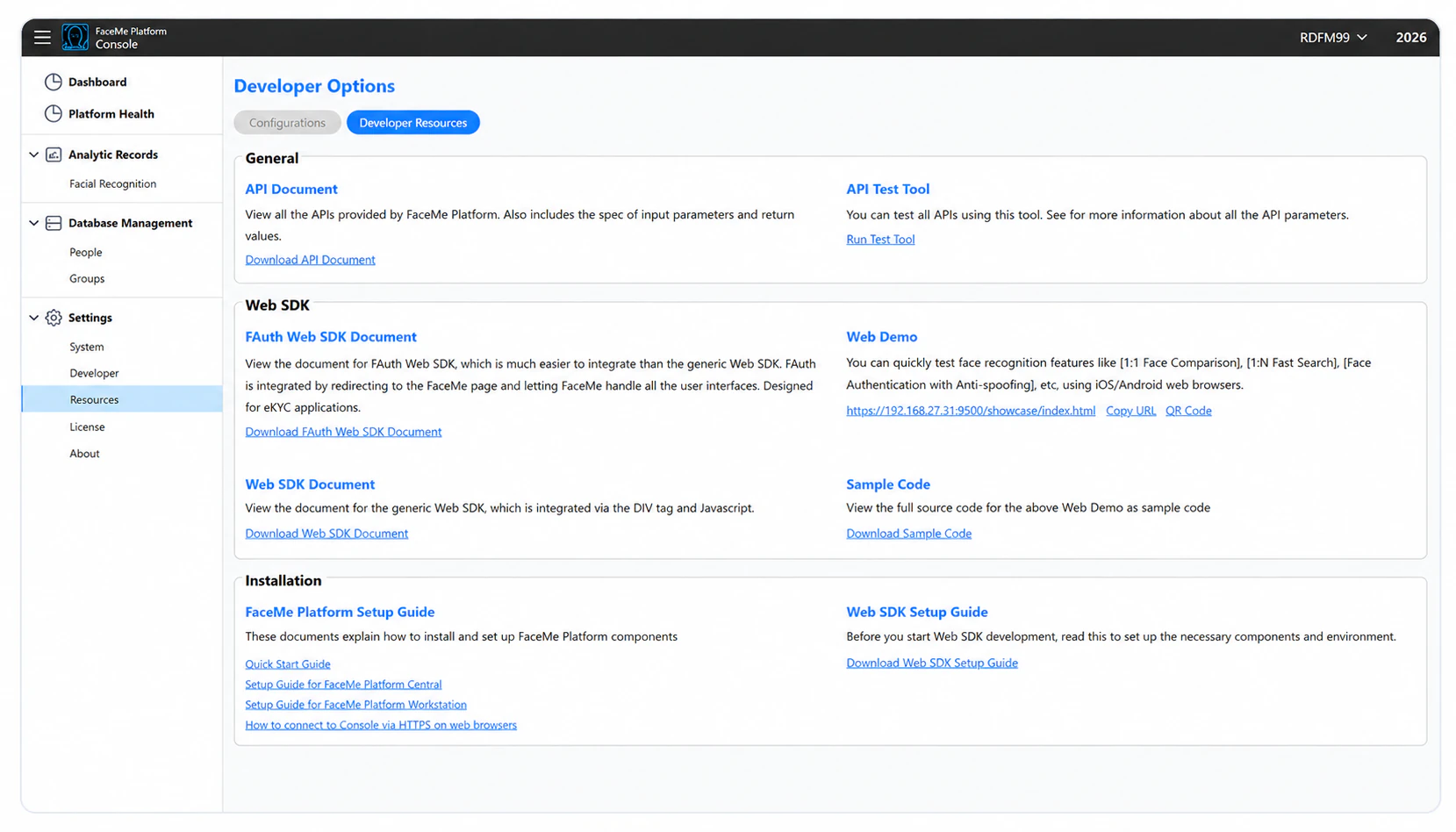
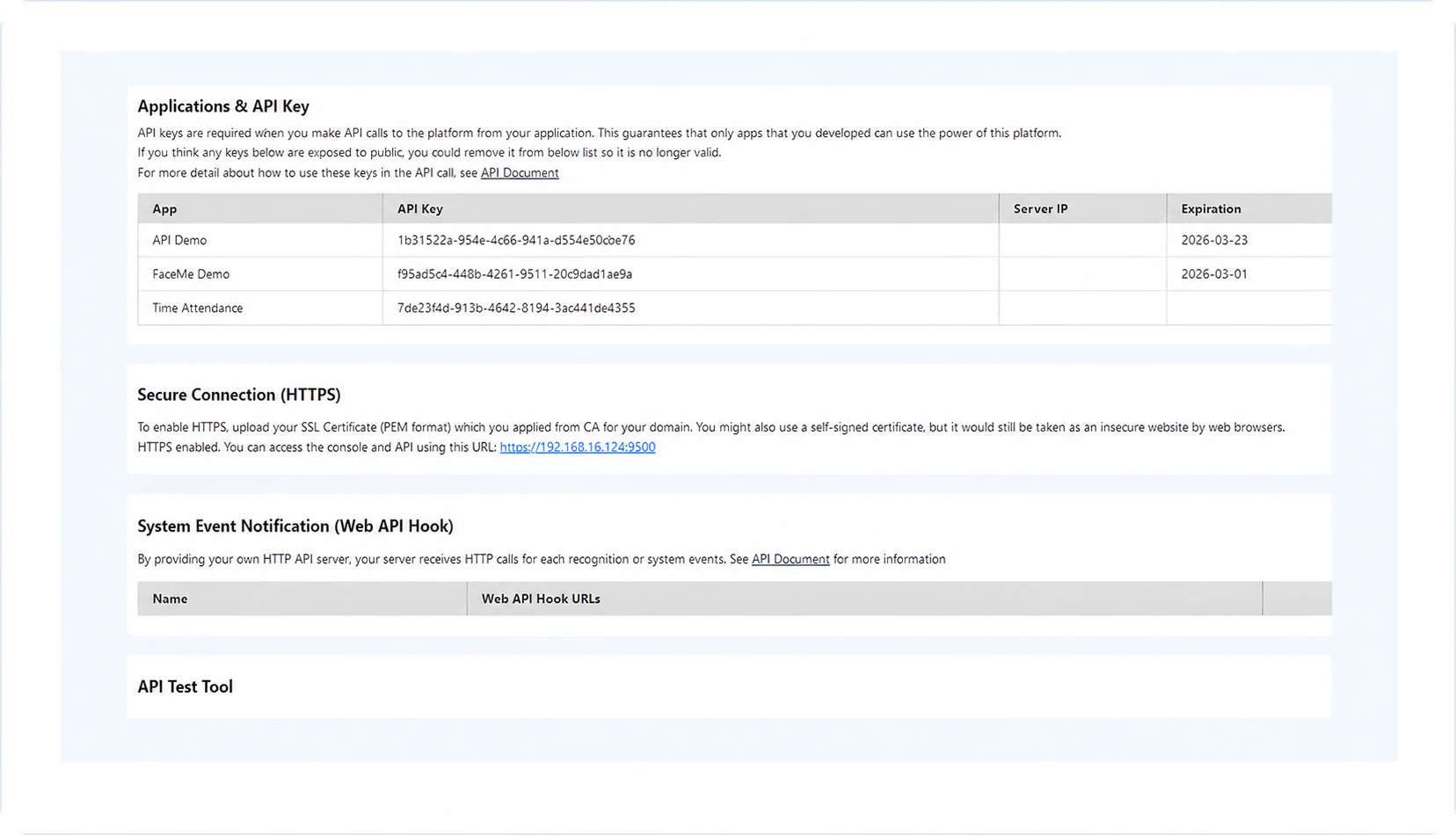
Comprehensive management features, demo systems, and API testing tools help developers manage, test, and integrate FaceMe® Platform.
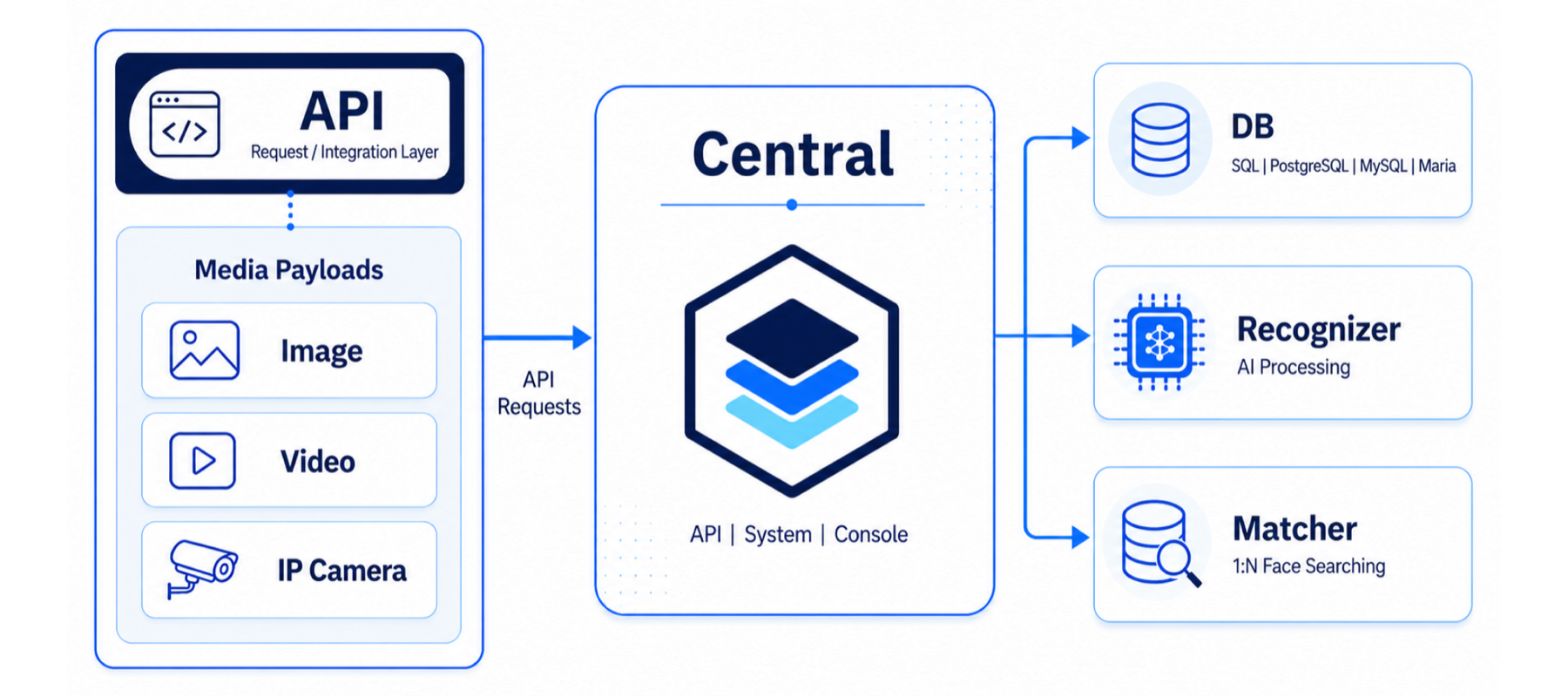
FaceMe Platform features a modular architecture built around three core modules: Central, Recognizer, and Matcher. Each module can scale independently based on workload, enabling flexible resource allocation and reliable performance across enterprise applications.
High-Performance Face Search
Search 60 million face records in just 648 milliseconds.
Zero Downtime Maintenance
Keep services running during database maintenance and product updates.
High Availability
Built-in load balancing and automatic failover help keep services running reliably.
Built for organizations that require scalability, high availability, and control over biometric data, FaceMe® Platform powers identity verification, eKYC, face-based authentication, access control, and large-scale identification across banking, government, manufacturing, and healthcare.


500+
Organizations
25+
Countries and Regions
Trusted by technology partners, enterprises, government agencies, and financial institutions worldwide.
Book a DemoChoose the integration model that fits your application and deployment needs
| FaceMe® SDK | FaceMe® Platform | |
|---|---|---|
 Developer Interface Developer Interface |
Native Programming Languages : C++, C#, Python, Java, Objective-C | Server-based HTTP RESTful API with Web SDK, and iOS/Android Client Library |
 Use Cases Use Cases |
・AIoT / IoT edge devices ・Native mobile, PC, and embedded applications ・Offline and low-latency applications ・Products with built-in face recognition | ・Web and mobile applications ・eKYC, banking, and digital identity verification services ・Large-scale backend systems ・Government services and public-sector projects |
 Key Benefits Key Benefits |
Embeds directly into edge devices or applications for offline, low-latency, and customizable face recognition. | Ideal for Web and mobile application backend services, as well as large-scale, highly available enterprise systems. |
 Scaling & Sync Scaling & Sync |
Scaling, failover, and data synchronization are managed by the development team. | Add server nodes to scale the system, with built-in load balancing, failover recovery, and automatic data synchronization. |
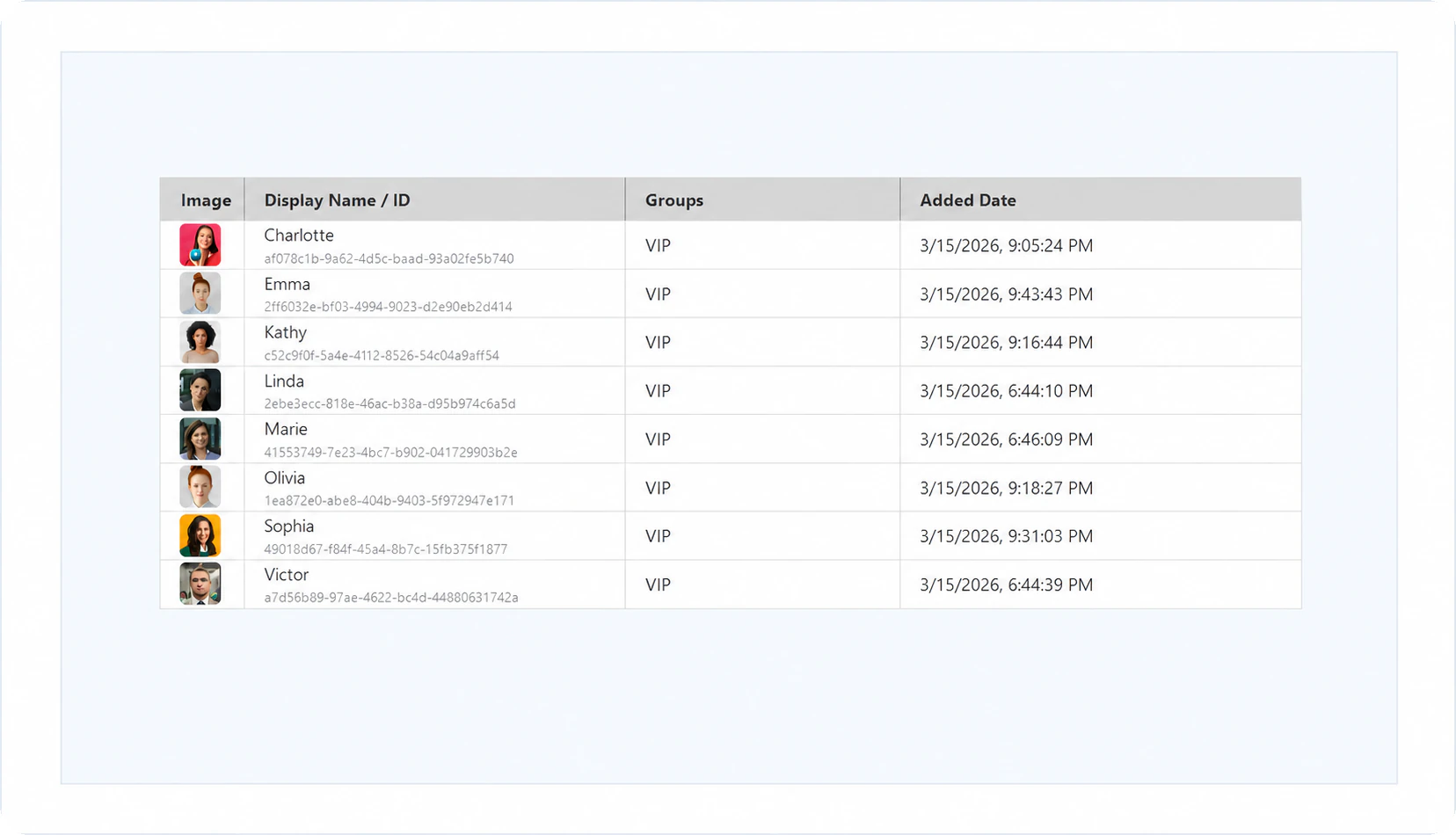
FaceMe Platform provides comprehensive management consoles and API testing tools to help developers monitor, test, and manage their deployments.
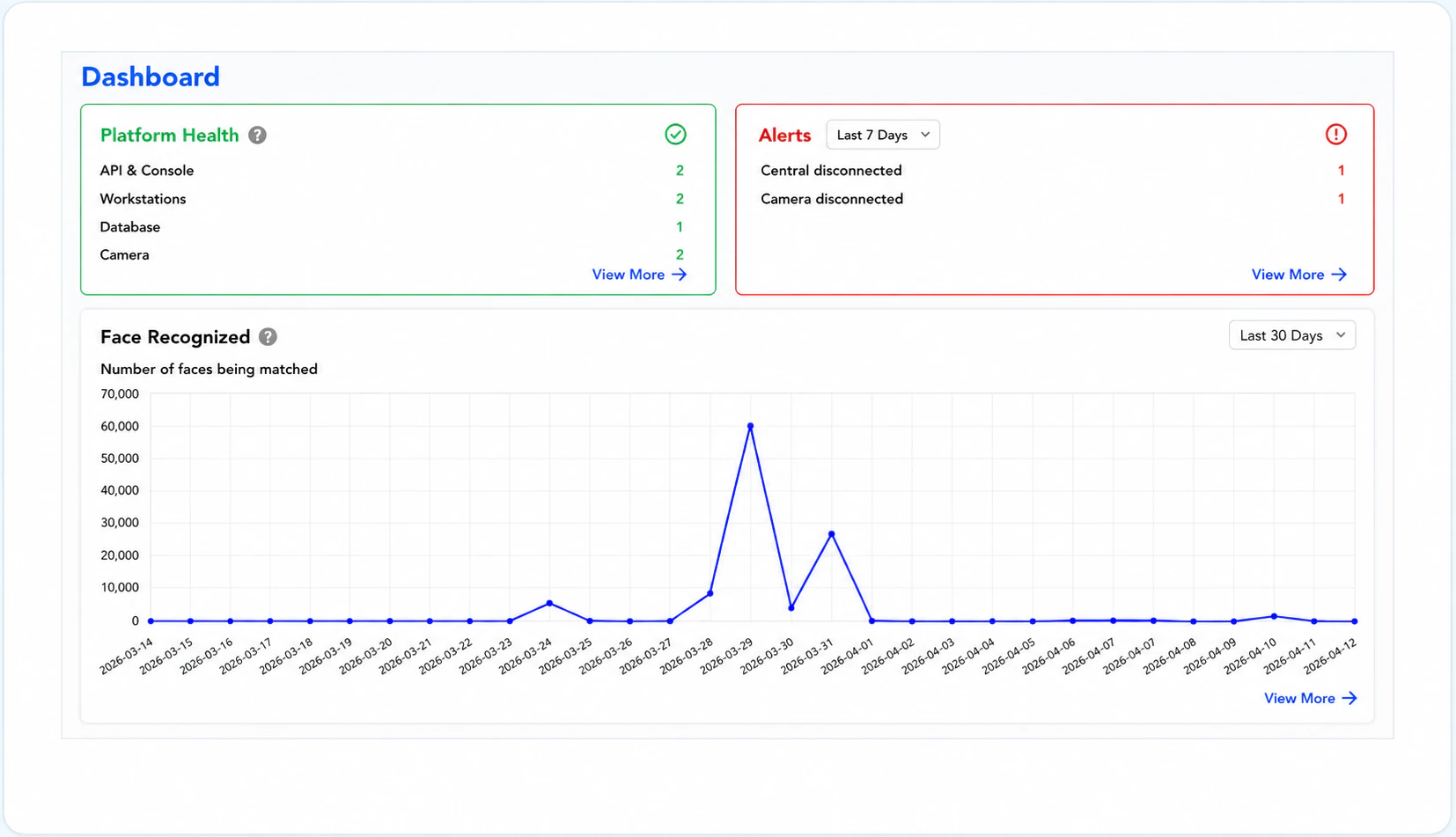
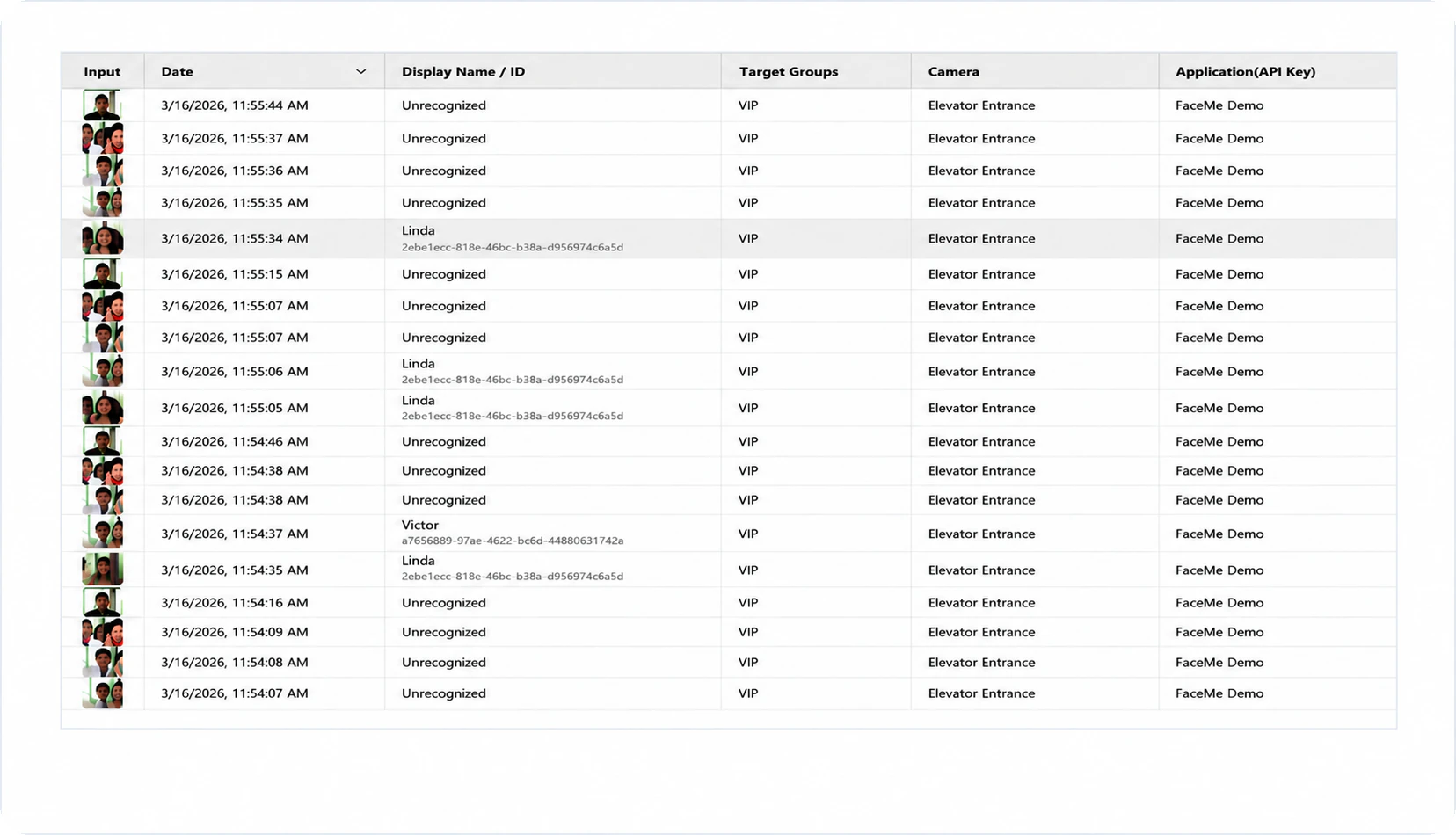
The web-based management console provides a live dashboard showing current system status, alerts, and logs.

Where will facial recognition be used in 2026? Explore the top 6 use cases.
Learn more>
Learn about facial recognition technology and its business applications in 2026
Learn more>
Both use the same high-accuracy FaceMe face recognition engine but offer different integration models and deployment options. FaceMe Platform delivers face recognition through REST APIs, with centralized management, load balancing, and failover support, while the SDK is a native library integrated directly into an application. FaceMe Platform supports server environments powered by Intel and AMD CPUs and NVIDIA GPUs, making it ideal for web applications, backend services, private clouds, and centrally managed enterprise deployments. FaceMe SDK supports x64 and ARM architectures and is optimized for edge AI chipsets and computing platforms, including NVIDIA Jetson, Intel, Apple, MediaTek, NXP, Qualcomm, and Ambarella, making it ideal for native, embedded, and on-device applications.
FaceMe Platform integrates into your existing systems through a small set of REST APIs, with no native SDK to compile and no low-level integration work required. Using the API documentation, sample code, management console, and built-in testing tools, most teams can launch a proof of concept within days, depending on project scope. Before integrating into their applications, developers can use the management console to test face recognition accuracy and validate key workflows.
FaceMe Platform is designed around privacy by design principles: it is customer-hosted software, deployed on premises or within a customer-managed private cloud, so all face images and biometric templates are processed and stored entirely inside the customer's own environment. CyberLink never receives, accesses, stores, or processes end users' biometric data. Because processing happens entirely within the customer's environment, customers retain full ownership and control of their data as the GDPR data controller. FaceMe Platform is built to support that control: it provides APIs and administrative tools for managing face enrollment, access, retention, and deletion, along with AES-256-encrypted biometric templates, role-based access control, and audit logs, giving customers everything they need to meet their GDPR obligations with confidence. CyberLink is also certified to ISO/IEC 27001 and ISO/IEC 27701, reflecting its commitment to information security and privacy management.
 Book a Demo